

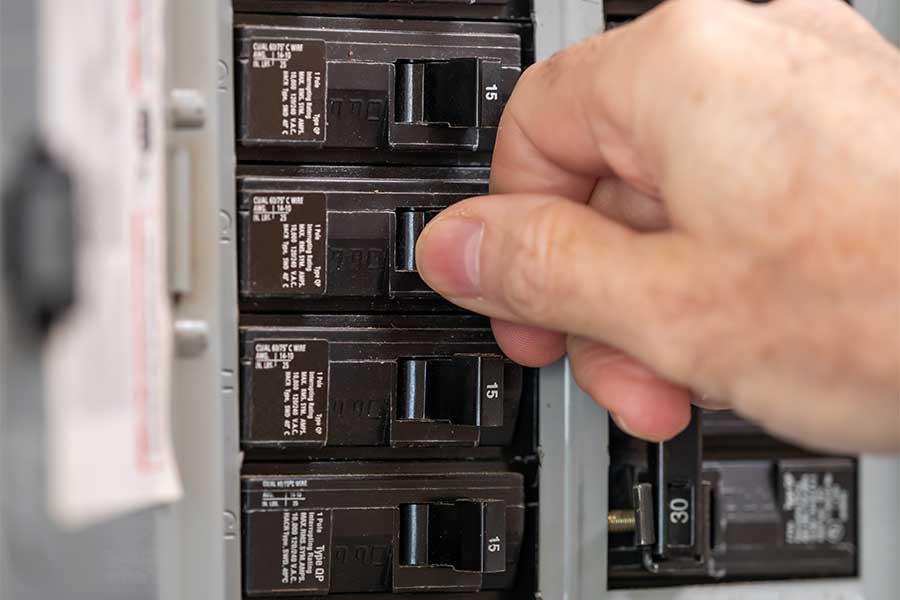
Circuit breakers are designed to trip. That is the whole point. When too much current flows through a circuit, the breaker cuts power to prevent overheating, damage, or fire. An occasional trip is normal. A breaker that trips repeatedly is telling you something is wrong, and it is worth paying attention.
Here is what is usually behind a circuit breaker that will not stay reset.
The Circuit Is Overloaded
The most common reason a breaker trips is a simple overload. Every circuit in your home has a rated capacity, typically 15 or 20 amps for standard household circuits. When the combined load of plugged-in devices exceeds that limit, the breaker does its job and shuts things down.
This is especially common in older Bergen County homes where the original wiring was designed for far fewer appliances than a modern household runs at once. Kitchens, home offices, and entertainment setups are frequent culprits. If your breaker trips when you run the microwave and coffee maker at the same time, the circuit is likely overloaded.
An electrician can evaluate your load distribution and add a dedicated circuit where it is needed.
There Is a Short Circuit
A short circuit is more serious than an overload. It happens when a hot wire comes into contact with a neutral wire or a grounded component, creating a sudden surge of current. The breaker trips immediately.
Signs of a short circuit include a burning smell near an outlet, visible scorch marks, or a breaker that trips the moment you try to reset it. Short circuits can result from damaged wiring, faulty appliances, or deteriorating insulation inside your walls.
This is not a wait-and-see situation. A licensed electrician should inspect the affected circuit before you attempt to restore power.
A Ground Fault Is Present
A ground fault occurs when a hot wire makes contact with a grounded surface, such as a metal electrical box or a wet floor. Ground faults are particularly dangerous in areas with moisture, including bathrooms, kitchens, garages, and outdoor outlets.
GFCI outlets and breakers are designed to catch ground faults faster than a standard breaker, but if your home has older wiring without proper GFCI protection, a ground fault can trip the main panel breaker instead.
New Jersey’s electrical code requires GFCI protection in specific areas of the home. If your Bergen County home was built before those requirements were updated, it may be time to have a licensed electrician assess your current protection.
The Breaker Itself Is Failing
Circuit breakers do not last forever. Most have a lifespan of 25 to 40 years under normal conditions, but they can wear out sooner depending on how often they trip, the age of the panel, and the quality of the original installation.
A breaker that feels warm to the touch, makes a buzzing sound, or trips without an apparent cause may be failing. A bad breaker can be replaced individually, but if your panel is aging or showing multiple signs of wear, a full evaluation makes sense.
When to Stop Resetting and Call for Help
If your breaker trips once and stays reset after you reduce the load, it was likely a straightforward overload. But if any of the following apply, contact an electrician rather than resetting it again:
- The breaker trips immediately or repeatedly after resetting
- You notice burning smells, discoloration, or warmth near the panel
- Multiple breakers are tripping at the same time
- The panel is older than 25 years or has known issues
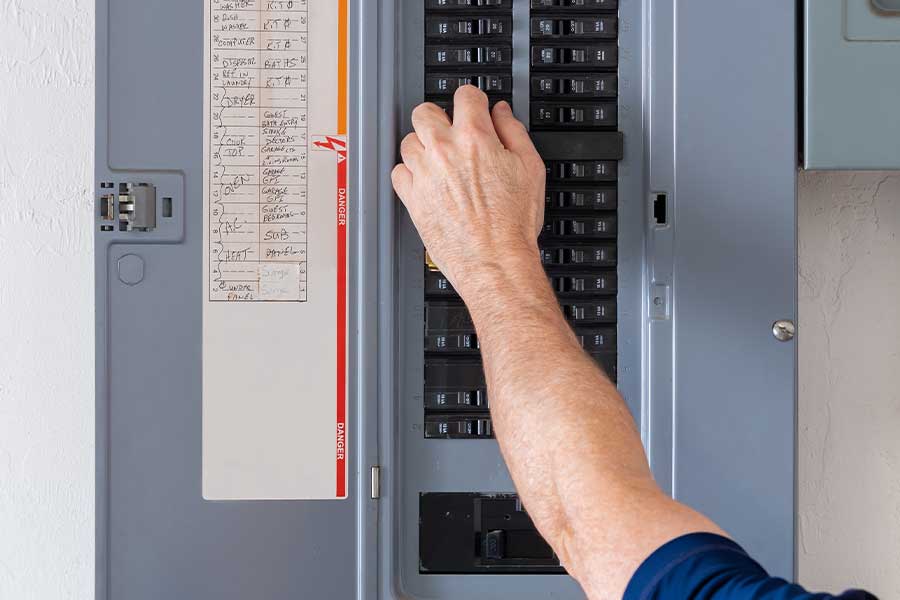
Protecting Your Home’s Electrical System
A tripping breaker is your electrical system working as intended, but repeated trips point to a problem that needs professional attention. Whether it is a capacity issue, damaged wiring, or an aging panel, the licensed electricians at Good Fellow Electric can diagnose what is happening and get it corrected safely.
Bergen County homeowners can reach our team to schedule an inspection or panel evaluation.