

Smoke detectors are the single most effective tool for early fire detection in a home. According to the National Fire Protection Association, the risk of dying in a home fire is more than twice as high in homes without working smoke alarms compared to homes that have them. That statistic alone makes proper installation and maintenance worth taking seriously.
What many homeowners don’t fully appreciate is how quickly a fire can become life-threatening. A fire can move from a small flame to a fully involved room in under two minutes. A working smoke detector buys the time needed to get everyone out safely. A missing one, or one with a dead battery, offers no warning at all.
Bergen County’s density adds another layer of importance to this. In a high-rise or multi-family building, a fire that starts in one unit can threaten others quickly. Working detectors on every level of your home are not just a good idea. In New Jersey, they are required by law.


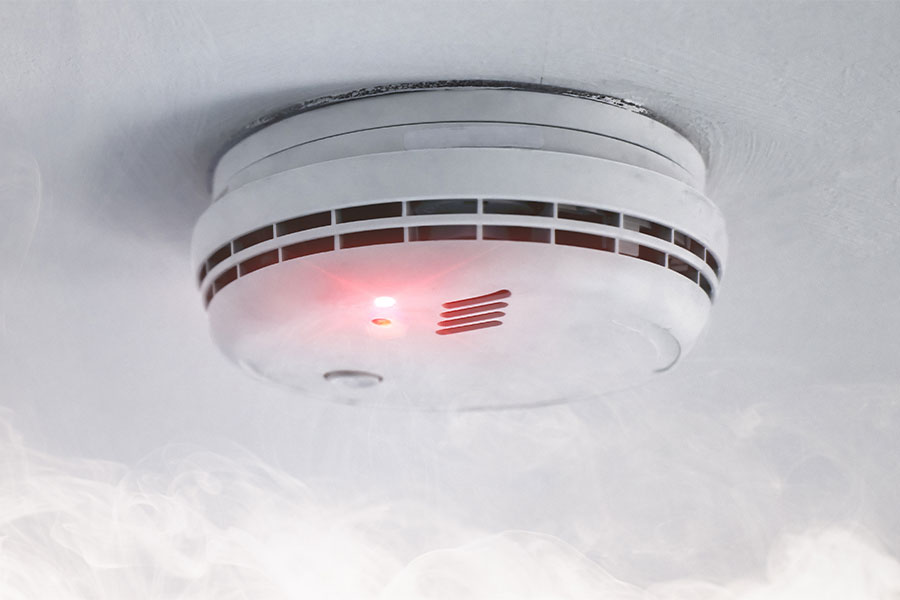
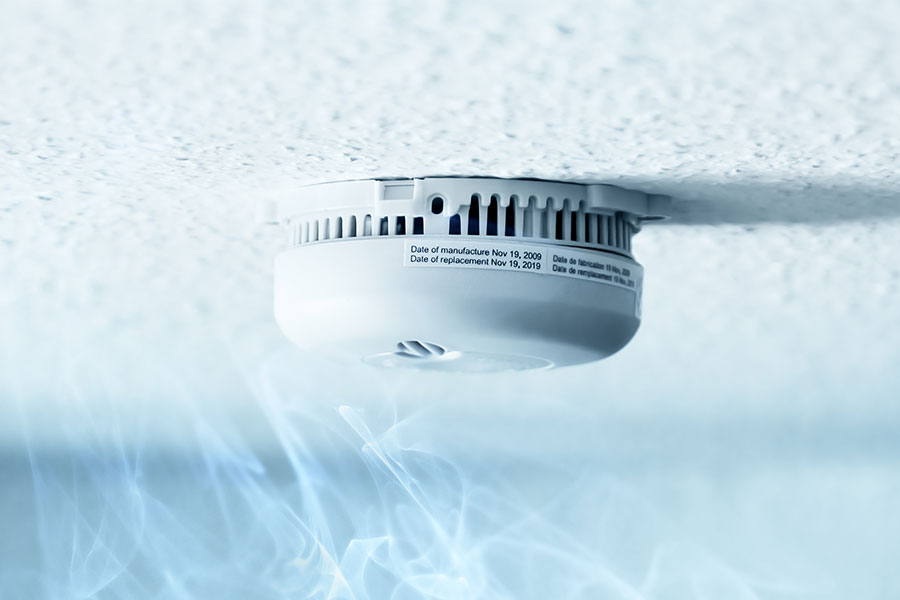
Smoke detectors don’t last forever, and a detector that’s past its useful life may not perform when it matters most. Here’s what to watch for:

There are two main types of smoke detectors, and each responds differently to the type of fire it encounters. Ionization detectors respond faster to fast-flaming fires, while photoelectric detectors are better at detecting slow, smoldering fires. Combination detectors include both technologies and are widely considered the most complete option for residential use.
Hardwired detectors are connected directly to your home’s electrical system and include a battery backup. They are generally more reliable than battery-only units and are required in new construction in New Jersey. Interconnected hardwired detectors communicate with each other, meaning when one alarm sounds, all of them sound throughout the home.
For Bergen County homeowners in older buildings, upgrading from standalone battery-operated detectors to a hardwired interconnected system is one of the most meaningful safety improvements you can make. It ensures that a fire detected in one part of the home alerts everyone, no matter where they are.
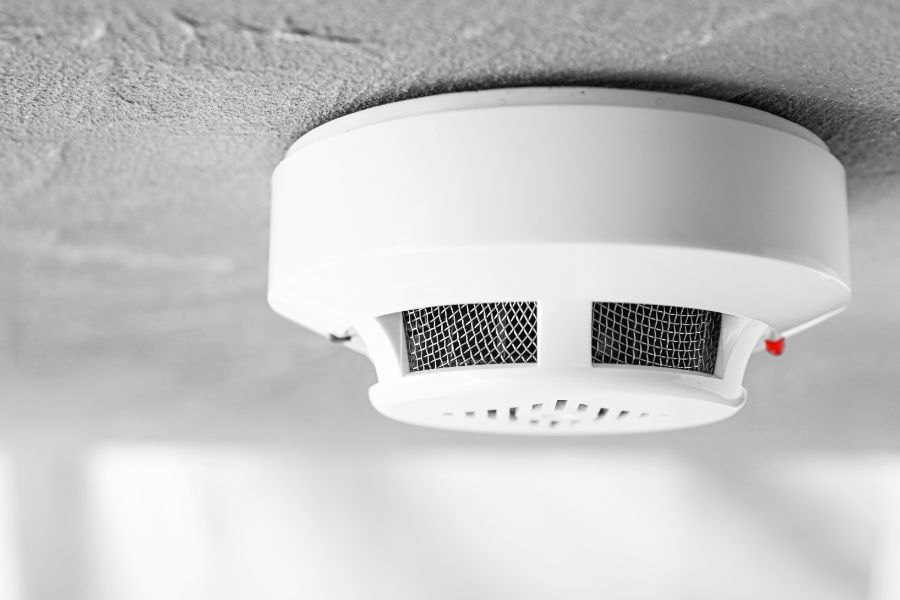
Good Fellow Electric handles smoke detector installation as a complete service. We assess your home’s current detector placement against New Jersey code requirements and identify any gaps in coverage before we begin.
For hardwired installations, we run the necessary wiring, connect detectors to your electrical system, and set up the interconnected network so every unit communicates properly. We also install the battery backup in each unit and test the full system before we leave. If you’re adding combination smoke and carbon monoxide detectors, we handle those in the same visit.
We make sure every detector is placed correctly, at the right height, and in the required locations including inside and outside every sleeping area and on every level of the home.

New Jersey requires a smoke detector inside and outside every sleeping area and on every level of the home including the basement. We assess your home and identify exactly what’s needed.
Yes. We run the necessary wiring and connect your new detectors to your home’s electrical system as part of the installation.
A full home installation typically takes two to three hours depending on the number of detectors and whether new wiring is required.
Most smoke detectors should be replaced every 10 years regardless of whether they appear to be working. The sensors degrade over time and may not perform reliably in an older unit.
Yes. Combination detectors are a practical choice for most homes and something we install regularly. We can discuss the options that make sense for your setup when you call.