

Ceiling fans come in a wide range of sizes, styles, and configurations, and the right choice depends on the room you’re working with. A fan that’s too small won’t move enough air to make a difference, and one that’s too large can feel overpowering in a smaller space.
Blade span is the starting point. Rooms under 75 square feet typically work well with a fan in the 29 to 36 inch range, while larger living spaces often call for something 52 inches or wider. Ceiling height also matters. Low-profile or hugger fans work best in rooms with standard 8-foot ceilings, while rooms with higher ceilings benefit from a fan with a downrod that positions the blades at the right height to move air effectively.
Beyond sizing, there are practical features worth considering. Damp-rated fans are the right choice for bathrooms and covered outdoor spaces. Smart-enabled fans that work with home automation systems are increasingly popular and something we’re experienced installing. If you’re replacing an existing fan or adding one to a room that already has a ceiling light, we’ll make sure the wiring supports whatever you choose.


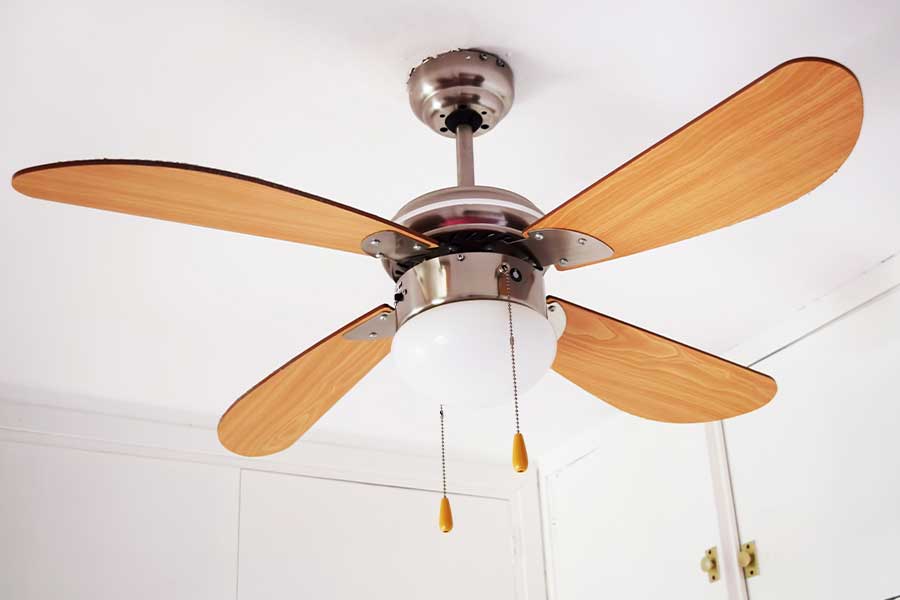
Good Fellow Electric handles ceiling fan installation from start to finish. We mount the fan securely to a properly rated ceiling box, connect all wiring to code, and make sure the fan is balanced and running correctly before we leave.
If the room doesn’t already have a ceiling box or the existing one isn’t rated for a fan, we take care of that as part of the installation. A fan-rated box is not optional. It’s a safety requirement, and we won’t cut corners on it. We also install wall controls or smart switches if needed, and we clean up completely when the job is done.

A ceiling fan doesn’t change the temperature in a room, but it changes how the temperature feels. The moving air creates a wind chill effect that can make a room feel several degrees cooler, which means you can run your air conditioning at a higher setting and still stay comfortable.
In Bergen County, where summer humidity off the Hudson River makes warm days feel heavier than the thermometer suggests, that wind chill effect is especially useful. A ceiling fan in a frequently used room can take real pressure off your cooling system during the months when it’s working hardest.
In winter, most ceiling fans can be reversed to run clockwise at a low speed. This pushes warm air that has collected near the ceiling back down into the living space, which helps maintain an even temperature and can reduce how hard your heating system has to work.


Fan sizing depends on your attic’s square footage and your roof’s pitch. We assess this during our initial visit and recommend the right unit for your specific space.
Most homes can accommodate an attic fan. Homes with very tight attic spaces or specific roof configurations may require a different approach, which we’ll identify during our assessment.
Most electric attic fans use between 200 and 400 watts, which is relatively modest compared to the reduction in air conditioning load they provide. Solar-powered options use no grid electricity at all.
Yes. Improved airflow reduces the humidity levels that allow mold and moisture damage to develop. If mold is already present, that’s a separate issue that should be addressed before or alongside fan installation.
Most installations are completed in two to four hours depending on attic access and the electrical work required.